
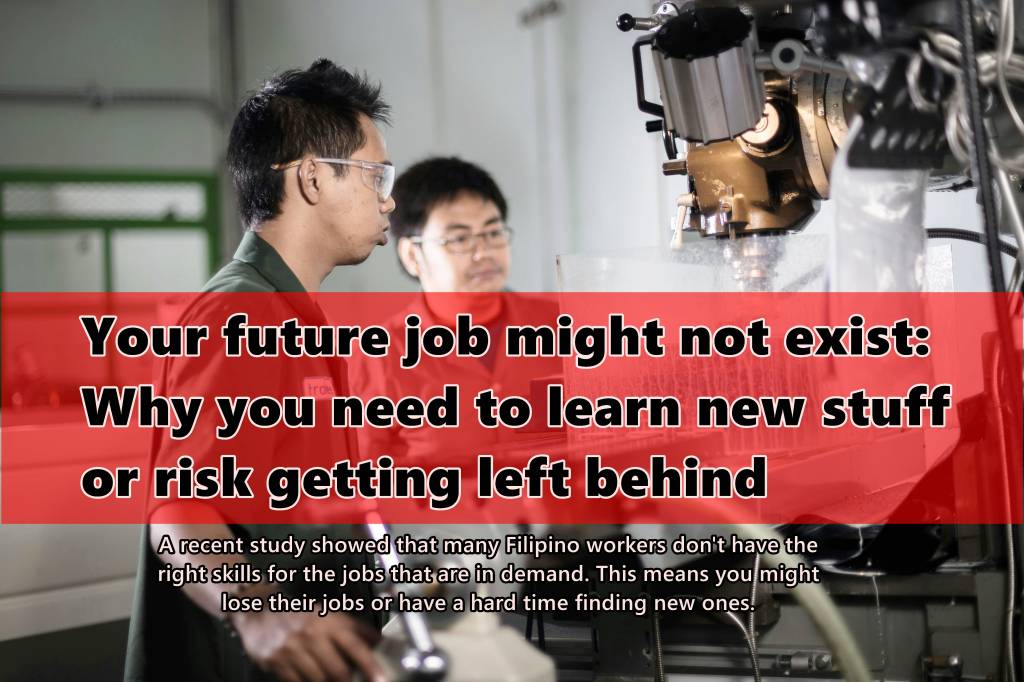
Urgent need for labor information system to address skills mismatch crisis, say labor experts.
Key takeaways:
- The Philippines faces a serious skills mismatch, where many workers lack the necessary skills for in-demand jobs.
- Rapid technological advancements are changing the nature of work, requiring workers to adapt and acquire new skills.
- A strong Labor Market Information System (LMIS) is crucial for tracking job trends, predicting future skill needs, and aligning education and training programs with industry demands.
- Individuals need to continuously learn and upgrade their skills to remain competitive in the job market.
- Government agencies, educational institutions, and businesses must work together to address the skills gap and create a skilled workforce.
The Philippines faces a looming skills crisis that could leave many workers unprepared for the future of work.
Experts warn that unless the country takes urgent steps to address the skills mismatch, many Filipinos risk being left behind in the rapidly evolving job market.
A recent study by the Philippine Institute for Development Studies (PIDS) highlighted the urgent need for a targeted skills development framework.
Dr. Lawrence Dacuycuy, a PIDS consultant, noted the growing demand for jobs requiring specific analytical skills, particularly in sectors like IT-BPM and manufacturing.
However, many workers still lack these essential skills, leaving them vulnerable to job displacement.
Experts say a strong labor market information system (LMIS) is needed to close the skills gap.
This system would track job trends, predict future skill needs, and align education with industry demands. A recent webinar highlighted the need for a data-driven approach to do it.
“A comprehensive labor market data system should provide a framework for anticipatory skills mapping, connecting current educational outputs to future labor needs and ensuring that national skill sets evolve with the economy,” said Dr. Connie Bayudan-Dacuycuy, a senior research fellow at PIDS, speaking at the webinar.
Dacuycuy stressed the need for a strong labor market information system, with standardized data and sector cooperation, to fill information gaps and ready workers for future job needs.
Jeanette Damo, executive director of the Institute for Labor Studies at the Department of Labor and Employment, stressed the need for government, schools, and businesses to work together to align training with job market needs.
“The skills gap blocks both industry growth and economic opportunities,” Damo said, building on L. Dacuycuy’s insights.
To close this gap, she proposed expanding labor market information systems and partnering with digital job platforms like JobStreet and LinkedIn to improve job matching and workforce development.
This collaboration would provide real-time data to guide policies and help schools update their programs to meet current industry standards.
“In this era, where technological change is constant, we must foster a culture of continuous learning and skills development,” said Professor Emily Christi Cabegin from the University of the Philippines School of Labor and Industrial Relations.
Cabegin also stressed the importance of improving technical-vocational education and training (TVET) programs to better align with current labor market trends.Ⓒ



 Business Bayani PH
Leave a comment