
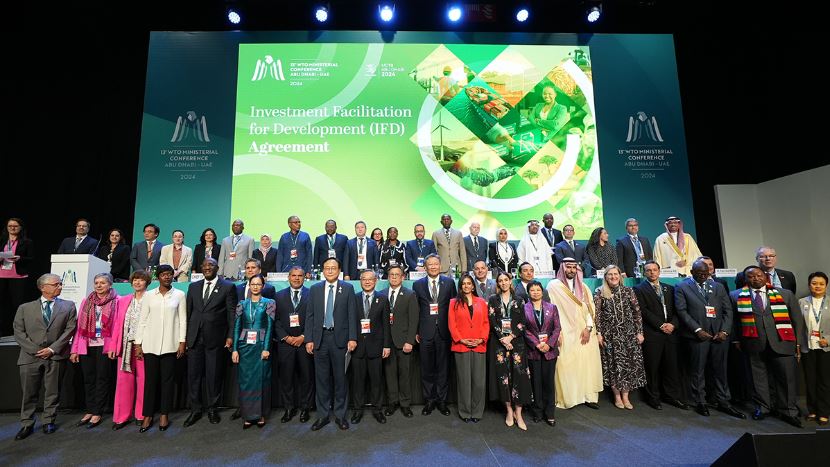
Key takeaways:
- WTO finalizes the Investment Facilitation for Development Agreement (IFD)
- The IFD aims to create a more transparent and efficient investment environment in developing countries
- Proponents believe the IFD will attract much-needed foreign direct investment (FDI)
- Increased FDI is expected to create jobs, foster innovation, and boost economic growth
- The success of the IFD relies on continued dialogue and collaboration among stakeholders
As the 13th WTO Ministerial Conference (MC13) unfolds in Abu Dhabi, a significant development has emerged with the finalization of the Investment Facilitation for Development Agreement (IFD). This new agreement promises to have a profound impact on attracting foreign direct investment (FDI) to developing countries, potentially leading to economic growth and development.
What is the IFD Agreement?
The IFD Agreement aims to create a more transparent and efficient investment environment in developing countries, making it easier for businesses to invest and operate.
This includes streamlining procedures for obtaining permits and licenses, fostering information sharing among member states, and encouraging best practices in investment facilitation.
Notably, over 120 WTO members, including close to 90 developing economies and 26 least-developed economies, have participated in shaping this agreement.
Potential Impacts of the IFD Agreement
Proponents of the IFD Agreement believe it will play a crucial role in attracting much-needed foreign direct investment (FDI) to developing countries. This increased investment is expected to spur economic growth by creating jobs, fostering innovation, and boosting productivity.
Additionally, the agreement’s focus on transparency and streamlining procedures can contribute to creating a more predictable and stable investment environment, critical for attracting long-term investments that support sustainable development.
“The IFD Agreement is paramount to countries, such as Argentina, that are consolidating their investment regulatory environment and promoting their full insertion in the global economy,” stated Diana Elena Mondino, minister for foreign affairs, International Trade and Worship of Argentina.
Challenges and Next Steps
While the IFD Agreement presents a promising path forward, some challenges remain. For the agreement to work well, two things are key:
- Helping developing countries be able to carry out the agreement’s requirements
- Listening to and addressing concerns raised by some involved parties about certain parts of the agreement
The next steps involve seeking formal adoption of the agreement by member states at MC13 and providing ongoing technical assistance to developing countries to ensure they can effectively benefit from its provisions.
Highlighting the importance of the achievement, WTO Director-General Ngozi Okonjo-Iweala said: “In the space of six years, you have moved from preparatory work to a pioneering Agreement that promises to help its signatories attract the foreign direct investment they want to drive growth, productivity gains, job creation, and integration into global supply chains.”
“The IFD Agreement is a historic success proving that the WTO continues to deliver outcomes fit for the 21st Century. It will support all WTO Members, in particular developing countries, to boost investment flows needed to tackle global challenges,” she added.
The Philippines echoed the excitement, with Hon Alfredo E Pascual, trade minister, secretary of the Department of Trade and Industry, saying: “The Philippines is pleased to be part of the IFDA, which promises to attract more foreign direct investments into my country. The IFD disciplines, specifically, transparency and facilitation, will certainly contribute to creating a more predictable investment environment around the world.”
The finalization of the IFD Agreement marks a significant step towards creating a more conducive environment for investment in developing countries. However, its successful implementation will require continued dialogue and collaboration among member states, development partners, and the private sector to ensure that the agreement delivers on its promise of promoting sustainable and inclusive economic growth for all. Ⓒ
📷 Three-quarters of members mark finalization of IFD Agreement, request incorporation into WTO



 Business Bayani PH
Leave a comment