
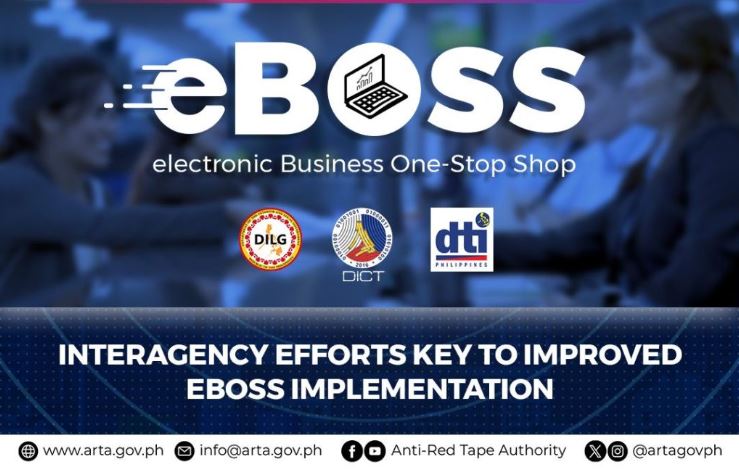
Key takeaways:
- ARTA targets 120 LGUs to join eBOSS system in 2024 for faster business permits
- eBOSS aims to simplify regulations, enable online applications, and reduce red tape
- Government aims to achieve 10-minute business permit processing with eBOSS
- Wider eBOSS adoption seen as attracting foreign investment and boosting economic growth
- ARTA collaborates with other agencies and companies to provide LGUs with resources for implementation
The Philippines’ anti-red tape crusade continues with the Anti-Red Tape Authority (ARTA) aiming to bring 120 more local government units (LGUs) under the electronic Business One-Stop Shop (eBOSS) system this year. This move seeks to boost efficiency, attract investment, and simplify business operations nationwide.
ARTA director general Ernesto Perez announced the ambitious target during a press conference, highlighting ongoing nationwide assistance provided to facilitate LGU onboarding.
“We’re targeting 120 LGUs on top of the 26 already certified by ARTA,” Perez said, attributing the initiative to collaboration with the Presidential Management Staff, Department of the Interior and Local Government, and Department of Information and Communications Technology.
The Department of Trade and Industry also participates in nationwide assistance efforts, aiming to streamline LGU implementation of the eBOSS system.
Beyond the Mandate
The push for eBOSS adoption aligns with the Ease of Doing Business and Efficient Government Service Delivery Act of 2018, which mandated all LGUs establish eBOSS by June 2021. However, technical and resource constraints have posed challenges to implementation.
To address these hurdles, ARTA partnered with conglomerates like the Aboitiz Group and Manila Electric Company to provide LGUs with necessary hardware, demonstrating a commitment to overcoming roadblocks.
eBOSS Benefits
The eBOSS project, established as part of the government’s efforts to streamline the business permit and licensing system, aims to simplify and optimize regulations and processes. This translates to smoother operations for businesses, making it easier to complete necessary procedures, obtain permits, and navigate the often-complex bureaucratic landscape.
While specific results from current implementations remain under evaluation, the potential for positive impact from the eBOSS project is clear. This ongoing initiative continues to see accelerated implementation and integration with advanced technologies like AI, further boosting its efficiency and user experience.
Efficiency Attracts Investment
eBOSS goes beyond mere compliance. Full compliance requires an online system for receiving electronic business applications via a Unified Application Form, issuing electronic tax bills and permits, and accepting cashless payments. This translates to faster transactions, reduced waiting times, and a more transparent experience for businesses.
Perez emphasized the system’s role in achieving the government’s 10-minute business processing target. Streamlined processes, he said, encourage businesses to formalize and contribute to government revenue. He further highlights the potential of eBOSS to attract foreign investors, contributing to the Marcos administration’s goal of becoming Southeast Asia’s second-largest foreign direct investment (FDI) hub by 2028.
“Joining eBOSS shows the Philippines is ready for business,” Perez said. “We’re rolling out the red carpet, not making it difficult for them to invest.”
President Ferdinand Marcos Jr. has previously directed public offices to eliminate red tape and provide stakeholders with a “red carpet treatment,” echoing ARTA’s efforts.
The focus on eBOSS adoption reflects the government’s shared vision of improving business processes, attracting investment, and boosting economic growth across the Philippines.◼



 Business Bayani PH
Leave a comment