
Key takeaways:
- The Comprehensive Economic Partnership Agreement (CEPA) is expected to significantly boost Philippine aerospace exports to the United Arab Emirates (UAE).
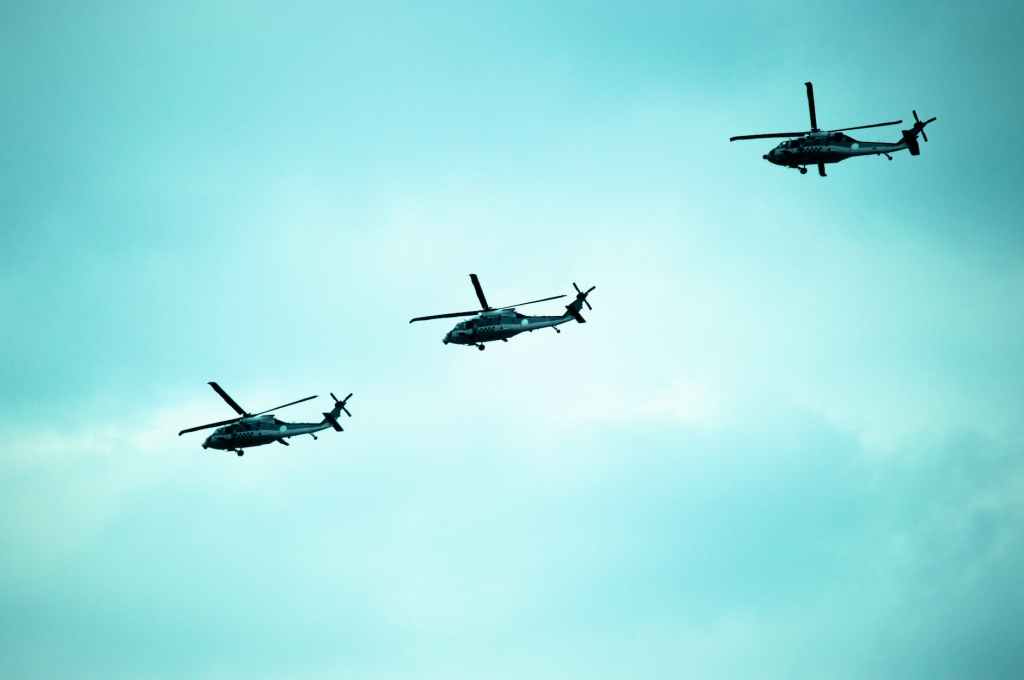
- High-value export products, particularly parts of helicopters and aircraft, are anticipated to benefit the most from the CEPA.
- In 2022, exports of airplane and helicopter components to the UAE experienced an impressive surge, registering a remarkable 122.97 percent increase.
- The CEPA, recently formalized with the signing of terms of reference (TOR), marks the Philippines’ first-ever free trade agreement (FTA) with a Middle Eastern country.
- Negotiations for the CEPA are set to commence in the first quarter of the year, with the goal of concluding the FTA talks within one to two years.
The Philippines is gearing up for a significant boost in its aerospace exports to the United Arab Emirates (UAE) following the recent developments in the Comprehensive Economic Partnership Agreement (CEPA), a groundbreaking free trade deal inked between Manila and Abu Dhabi.
Department of Trade and Industry (DTI) Undersecretary Allan Gepty, speaking at a press briefing on Monday, highlighted the potential windfall for the Philippine aerospace sector, citing the CEPA’s positive impact on high-value export products, specifically parts of helicopters and aircraft.
“Maybe one important consideration is the fact [that] our exports to UAE, many are high-value products like parts of helicopters or aircrafts. Noting that UAE basically owns one of the largest airlines in the world, we hope we can also improve our niche in the aerospace industry,” Gepty stated.
The DTI reported that exports of various airplane and helicopter components to the UAE witnessed an exceptional surge in 2022, recording a staggering 122.97 percent increase.
Gepty emphasized that beyond aerospace, the prospective free trade agreement (FTA) with the UAE is poised to elevate Philippine exports across various sectors, including agriculture and industry, to the Middle East and Europe. The UAE’s strategic positioning as a hub for Philippine products in these regions is expected to play a pivotal role.
The recent milestone in the CEPA negotiations was marked on December 2 when DTI Secretary Alfredo Pascual and Minister of State for Foreign Trade Dr. Thani bin Ahmed Al Zeyoudi signed the terms of reference (TOR) in Dubai. This significant step took place on the sidelines of the 28th meeting of the Conference of the Parties of the United Nations Framework Convention on Climate Change.
Gepty, who is also the lead negotiator for the country’s free trade agreements (FTAs), underscored that the CEPA represents a historic first for the Philippines—a comprehensive FTA with a Middle Eastern nation.
With the TOR formalized, Gepty revealed that negotiations are set to commence in the first quarter of the year, with the ambitious goal of concluding the FTA talks within one to two years.
Pascual, expressing urgency, stated, “I gave a marching order to get it done quickly,” emphasizing the need for the country to swiftly reap the benefits of the FTA with the UAE.
During a visit to Manila in late November, Minister Al Zeyoudi disclosed the UAE’s commitment to expeditious negotiations, citing the country’s typical six-month timeframe for FTAs. “We’re going to put pressure so we’re going to conclude in six months,” he affirmed, further revealing the UAE’s target to amplify bilateral trade and investments with the Philippines through the CEPA by five times.
As the Philippines looks forward to diversifying and expanding its trade relations, the aerospace sector emerges as a key player, poised for exponential growth in the promising UAE market under the transformative CEPA.◼



 Business Bayani PH
Leave a comment