
Key takeaways:
- ARTA strengthens ties with M4GG and business chambers to enhance the business environment.
- Memorandum of Understanding (MoU) signed with M4GG aims to empower local chief executives for effective policy formulation.
- Mayors commit to principles of good governance through M4GG, emphasizing transparency, accountability, and adherence to the rule of law.
- ARTA expands collaboration with PCCI, GPCCI, and NordCham to streamline business processes and reduce red tape.
- Strategic partnerships aim to improve local and national business landscapes, fostering progress and benefitting Filipino citizens.
The Anti-Red Tape Authority (ARTA) has inked agreements with influential organizations in a move toward fostering a business-friendly environment in local government units (LGUs) and the broader business sector. Secretary Ernesto V. Perez, representing ARTA, joined forces with Mayors for Good Governance (M4GG) and business chambers, marking a crucial step in enhancing the nation’s economic landscape.
In a recent ceremony at the B Hotel in Quezon City on November 25, Secretary Perez and Mayor Sitti Djalia Hataman of Isabela City, Basilan, sealed a Memorandum of Understanding (MoU) aimed at strengthening empowerment programs for local chief executives and LGUs nationwide. The objective is clear: to facilitate the formulation of effective policies supporting the ease of doing business and fostering good governance across the country.
M4GG, a network of Philippine mayors committed to upholding principles of good governance, gained momentum since its launch in August. With over 150 mayors pledging to champion transparency, accountability, and adherence to the rule of law, the initiative signifies a collective effort towards positive change.
Secretary Perez emphasized the importance of implementing ARTA initiatives at the local level, including the Electronic Business One Stop Shop (eBOSS). He highlighted the pivotal role of mayors in driving progress and the need for streamlined government processes through digitalization.
“We may have formulated the best policies and directions, but their effectiveness hinges on implementation by our mayors. With your guidance toward good governance, this country is poised for significant progress,” remarked Secretary Perez, expressing optimism for substantial development by the end of the administration’s term.
Aligning with President Ferdinand R. Marcos Jr.’s directive to streamline and digitalize government processes, ARTA remains committed to sharing best practices and advocating for policies that enhance good governance.
The Department of the Interior and Local Government (DILG), represented by Assistant Secretary Lilian De Leon, praised the collaboration, emphasizing the importance of partnerships between LGUs and the government and private sector.
De Leon highlighted the need for local chief executives to prioritize development over politics, focusing on policy development as a cornerstone for local government organizations. “The government’s campaign on ease of doing business is a strategic move aimed at improving services, increasing investments, and furthering economic development,” she stated.
Closing the session, Mayor Krisel Lagman-Luistro of Tabaco City, Albay, a member of M4GG, emphasized the essential roles of the Government, Business Sector, and Civil Society in good governance. Recognizing the collective effort needed, she emphasized the importance of partnerships between the government, civil society, and the business sector.
In another significant move, ARTA expanded its collaborative efforts with the business sector. The organization signed agreements with three prominent business chambers—Philippine Chamber of Commerce and Industry (PCCI), German-Philippine Chamber of Commerce and Industry (GPCCI), and Nordic Chamber of Commerce of the Philippines (NordCham), reported local newspaper BusinessWorld.
GPCCI President Stefan Schmitz expressed commitment to bridging the business community and the government to streamline processes and reduce bureaucratic challenges. The MoU, according to Schmitz, is a proactive step toward creating a more dynamic and competitive business landscape in the Philippines.
German Ambassador to the Philippines Andreas Michael Pfaffernoschke welcomed the partnership, anticipating positive outcomes for German companies operating in the Philippines. Pfaffernoschke emphasized the potential to ease business operations, develop bilateral economic relations, improve the local investment climate, and promote welfare for Filipinos.
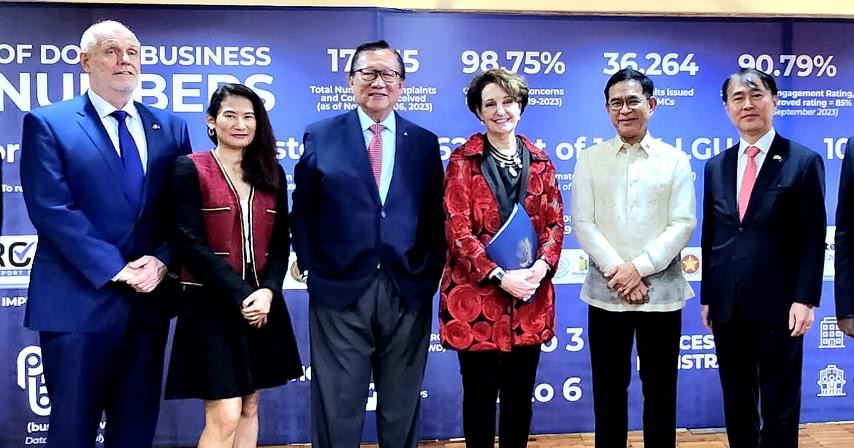
PCCI President George E. Barcelon highlighted the importance of communication between the private sector and ARTA at the regional level. Through the partnership, PCCI aims to share regional insights, ensuring that areas with gaps in need of address receive attention.
Jesper Svenningsen, executive director of NordCham, emphasized the significance of simplifying business processes to attract more foreign investment, especially from Nordic countries. The MoU, he believes, will guide ARTA toward the next steps that make doing business in the Philippines smoother.
ARTA Secretary Ernesto V. Perez revealed that these MoUs with business chambers follow similar agreements with the Korean Chamber of Commerce Philippines and the Malaysia Chamber of Commerce and Industries Philippines. Perez outlined future collaborations with the European Chamber of Commerce of the Philippines and the American Chamber of Commerce of the Philippines.
“Through the MoUs that we have signed, we will capacitate them to refer any complaints by any of their members so that ARTA can act accordingly,” added Secretary Perez, underscoring the collaborative effort to address red tape issues and improve the overall business environment.
These strategic partnerships between ARTA, M4GG, and key business chambers mark a decisive step toward empowering local leaders, streamlining government processes, and fostering a conducive business environment. ◼



 Business Bayani PH
Leave a comment